
The Lagos–Calabar Coastal Highway: Nigeria’s next development corridor
Infrastructure has always preceded value. As the Lagos–Calabar Coastal Highway reshapes Nigeria’s coastline, the question for developers is whether they are positioned to recognise the opportunity early enough.
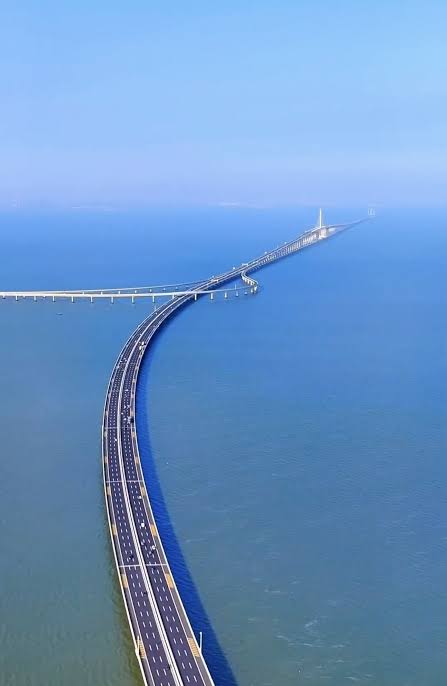
For decades, some of the world’s most valuable real estate markets have emerged not by chance, but by infrastructure. Highways, rail networks, ports, and airports have consistently transformed underutilised land into thriving economic centres, attracting investment, businesses, and communities long before development reached its peak.
Nigeria’s Lagos–Calabar Coastal Highway represents one of the country’s most ambitious infrastructure projects in recent history. While its immediate purpose is to improve transportation and regional connectivity, its long-term significance extends far beyond mobility — it has the potential to reshape where people live, where businesses invest, and how future communities are planned along Nigeria’s coastline. For developers, the question is no longer whether infrastructure influences real estate. It is whether they are positioned to recognise its opportunities early enough.
Infrastructure creates more than roads
Roads do not simply connect destinations; they connect economies. Improved transport corridors reduce travel time, lower logistics costs, increase accessibility, and unlock areas that were previously considered difficult to develop. As movement becomes easier, businesses gain confidence, residential demand grows, commercial activity expands, and supporting infrastructure naturally follows. Around the world, major transport investments have become catalysts for entirely new urban districts, industrial hubs, hospitality developments, and mixed-use communities. The Lagos–Calabar Coastal Highway has the potential to become one of those defining corridors.
A new geography of investment
Historically, development has clustered around established commercial centres. But modern infrastructure changes this dynamic by extending economic activity into emerging locations. As connectivity improves, investors begin to evaluate opportunities beyond traditional markets, developers explore larger land parcels, and businesses seek locations that combine accessibility with long-term growth potential. Rather than concentrating opportunity in a handful of urban centres, strategic infrastructure creates an entirely new geography of investment — and for forward-thinking developers, this shift is a chance to participate in growth before markets mature.
The rise of planned communities
Infrastructure alone does not create great places. Its true value is realised when it supports thoughtfully planned developments that integrate residential, commercial, recreational, and public spaces into sustainable communities. Today’s buyers and investors increasingly value accessibility, liveability, environmental resilience, and proximity to essential services — accelerating demand for mixed-use developments where people can live, work, shop, and connect within a well-designed environment. The most successful projects along emerging corridors will not simply occupy land. They will create destinations.
Why timing matters
In every real estate cycle, timing separates opportunity from hindsight. Markets often experience their strongest appreciation during the transition from infrastructure announcement to full economic activation. Developers who understand demographic trends, planning regulations, market demand, and infrastructure sequencing are better positioned to make informed decisions before competition intensifies.
Sustainable value is rarely created overnight. It is built through patience, insight, and execution.
This is not an argument for speculation. It is a case for disciplined market research, strategic land acquisition, and long-term planning.
Opportunities beyond housing
The Coastal Highway presents possibilities that extend well beyond residential estates. Improved connectivity can stimulate demand across an entire supporting ecosystem:
- Logistics facilities and industrial parks
- Hospitality developments and tourism destinations
- Healthcare infrastructure and educational institutions
- Commercial centres and waterfront mixed-use projects
As populations grow and economic activity expands, demand naturally extends to the services that support thriving communities. Developers who consider these broader ecosystems often create projects that remain resilient across changing market conditions.
Building responsibly for future generations
Every major infrastructure project also carries a responsibility. Growth should not come at the expense of environmental sustainability, resilient urban planning, or community inclusion. Responsible development requires careful attention to environmental impact, efficient resource management, climate resilience, and the creation of public spaces that enhance quality of life. The next generation of successful developments will be defined not only by architectural quality, but by how well they balance economic growth with long-term sustainability.
Infrastructure creates possibility. Responsible development creates lasting value.
At Tilden, we believe the future of real estate lies not simply in constructing buildings, but in understanding the forces that shape thriving communities. The developments that define tomorrow will not be those that simply follow growth. They will be those that help shape it.
Keep reading
Related insights.
Why project delivery matters more than marketing
A campaign can sell a unit before the first foundation is poured. Only delivery decides whether that buyer becomes an advocate or a disappointed investor.
Read article
Building quality vs. building fast: why Tilden chooses to build right
Speed sells, but a building is judged decades after handover, not on the day the ribbon is cut. Here is why we treat quality as the investment that protects every other investment.
Read article